
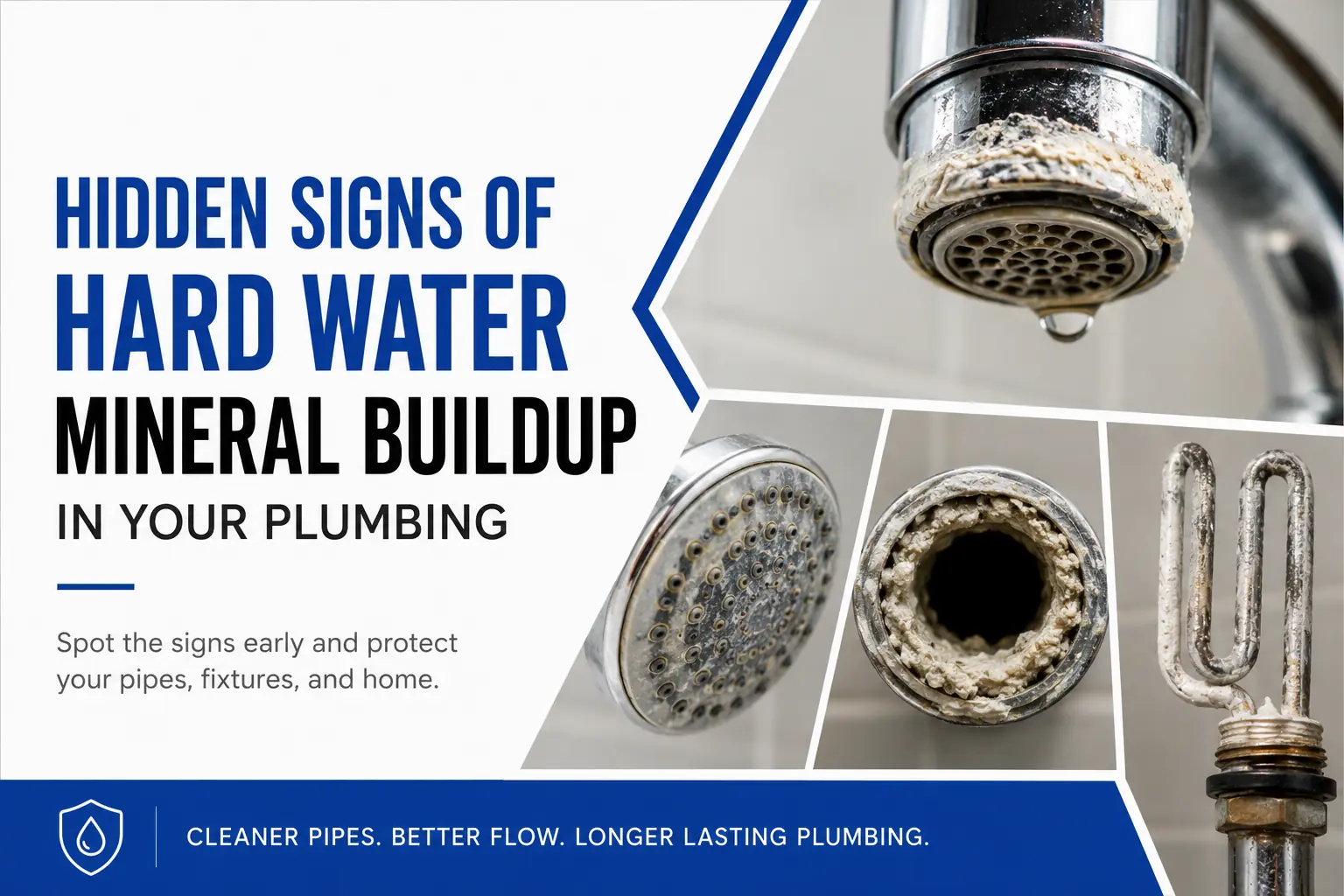

Many homeowners ignore the early signs of mineral buildup in household plumbing because the damage happens slowly over time. Hard water leaves behind deposits that collect inside pipes, fixtures, and appliances. These deposits often contain calcium and magnesium, which create stubborn scale and reduce plumbing efficiency. If left untreated, hard water problems can affect your entire water supply, increase utility bills, and shorten the life of important plumbing equipment throughout your home.
The challenge with mineral buildup is that it often starts in hidden areas homeowners rarely inspect. You may notice cloudy dishes, low water pressure, or white residue around faucets without realizing the real cause is hard minerals in water. Over time, the build up in pipes can become severe enough to restrict water flow and damage appliances like water heaters, dishwashers, and washing machines. Understanding the warning signs early can help prevent expensive plumbing repairs later.
What Causes Hard Water Mineral Buildup?
One of the main answers to what causes hardness in water is the presence of dissolved minerals collected as groundwater travels through rock and soil. These minerals typically include high concentrations of calcium carbonate and magnesium. Homes connected to municipal water systems can still experience high mineral content depending on the region’s groundwater conditions. Over time, the minerals remain behind as water evaporates, leading to thick scale deposits inside plumbing fixtures and pipes.
The reason for hard wate issues often comes down to untreated mineral-rich water entering residential plumbing systems daily. As hot water moves through pipes and appliances, minerals harden and stick to interior surfaces. This creates hard water deposits in pipes that slowly reduce efficiency. According to the EPA drinking water guidance, mineral levels can vary greatly based on local water sources and groundwater composition.
Hidden Signs of Hard Water in Your Home
The earliest hard water signs are usually small annoyances that gradually become serious plumbing concerns. Homeowners may notice white stains around faucets, chalky residue on sinks, or cloudy buildup on shower doors. Soap may stop lathering properly, leaving behind thick soap scum on tubs and tile surfaces. Many people asking how do you know if you have hard water first recognize the issue through these visible surface deposits inside kitchens and bathrooms.
Another common symptom involves how your skin and laundry feel after washing. Hard water can make clothes feel stiff and leave residue on fabrics after every cycle. It may also affect skin and hair, causing dryness, irritation, and dullness after bathing. If you regularly clean white residue from faucets and notice recurring scale around your shower head, these are strong indicators of excessive mineral build up in water throughout your plumbing system.
Low Water Pressure Caused by Mineral Buildup
One of the most damaging issues with hard water occurs when mineral deposits collect inside supply pipes. As the deposits grow thicker, water flow becomes restricted and household fixtures receive less pressure. Many homeowners assume aging pipes are the only cause, but mineral buildup in pipes is often the hidden problem reducing flow rates. If your faucets and showers suddenly lose pressure, it may be time to inspect the plumbing system before blockages become severe.
Restricted water flow can also force plumbing fixtures and appliances to work harder than normal. Over time, this strain may increase repair costs and reduce efficiency across your entire home. If your property already struggles with pressure fluctuations, reviewing this low pressure guide can help identify related plumbing issues. Professional plumbers can inspect internal pipe scaling and determine whether cleaning or replacement is the safest long-term solution.
How Hard Water Damages Water Heaters and Appliances
Hard water creates major problems for appliances that rely on heated water. As minerals separate during heating, they settle inside tanks and form thick sediment layers. This buildup reduces heating efficiency and forces systems to use more energy. Water heaters are especially vulnerable because the constant heating process accelerates scale formation. Over time, sediment buildup can create overheating, loud rumbling sounds, and premature equipment failure.
Appliances like the dishwasher and washing machine also suffer from heavy mineral accumulation. Mineral residue may clog spray arms, reduce cleaning performance, and leave spots on dishes and clothing. Homeowners searching for symptoms of hard water often overlook appliance inefficiency as a warning sign. If your water heater shows performance issues or rising energy bills, reviewing this inspection resource may help you understand when professional servicing becomes necessary.
Signs Mineral Buildup Is Hiding Inside Pipes
Not all plumbing damage from hard water is visible. In many homes, the most serious build up in pipes develops deep inside plumbing lines where homeowners cannot see it. Hidden corrosion and scaling can narrow pipe interiors and eventually create leaks or pipe bursts. As minerals continue collecting, plumbing fixtures may develop inconsistent water flow or unusual noises. These hidden blockages often remain unnoticed until plumbing performance drops significantly.
Pipe damage caused by hard water deposits in pipes may also increase the risk of hidden leaks behind walls or beneath flooring. Small leaks caused by pressure stress can slowly damage drywall, insulation, and flooring materials. If you suspect hidden pipe problems, reading this water leak guide can help identify additional warning signs before structural damage spreads throughout the home.
Why DIY Solutions Often Fail
Many homeowners attempt to remove visible scale using vinegar or store-bought cleaners, but these methods rarely solve the deeper issue. Surface cleaning may temporarily remove mineral stains from sinks and faucets, but it cannot fully eliminate mineral buildup in pipes. Once scale develops inside plumbing lines or appliances, professional equipment is usually required to restore proper water flow and system performance safely.
DIY treatments also fail because homeowners often misdiagnose the source of plumbing issues. Problems like low pressure, noisy pipes, and appliance inefficiency may appear unrelated at first. Without proper testing, it is difficult to know the exact water quality condition or determine how severe the internal buildup has become. According to research from the Penn State Extension water softening guide, proper water testing is critical for identifying mineral concentration levels accurately.
Professional Signs That Your Plumbing Needs Service
Professional plumbing service becomes necessary when mineral deposits begin affecting the overall reliability of your plumbing system. Warning signs include recurring drain issues, persistent low pressure, appliance breakdowns, and rising water heating costs. If your fixtures constantly develop scale shortly after cleaning, your plumbing may contain excessive high levels of mineral accumulation. Homes with aging plumbing systems are especially vulnerable to severe buildup problems.
- Visible white residue around faucets and fixtures
- Frequent appliance repairs related to water flow
- Reduced hot water performance
- Recurring pipe leaks or corrosion
- Unusual noises inside plumbing lines
- Constant cleaning caused by soap scum buildup
If you experience several of these symptoms together, professional plumbing evaluation is recommended. Services like plumbing repair and pipe repair can identify hidden mineral damage before costly system failures occur. The Water Quality Association also explains how untreated hard water can reduce plumbing efficiency and appliance lifespan.
How Water Treatment Helps Prevent Mineral Buildup
The most effective way to control hard water problems is by reducing mineral content before it enters your plumbing system. Water softening systems remove excess calcium and magnesium from incoming water, helping protect pipes and appliances from scale formation. Homes using properly maintained treatment systems often experience cleaner fixtures, improved appliance efficiency, and fewer plumbing repairs over time.
Many homeowners wonder how to tell if you have hard water without visible plumbing damage. A professional plumber can have your water tested to determine mineral concentration levels and recommend the best treatment options. In some cases, installing filtration or softening equipment can significantly improve plumbing lifespan and overall household water performance while reducing recurring maintenance problems.
Why Choose Master Plumber Service
Plumbing systems affected by mineral buildup require accurate diagnosis and experienced repair solutions. Professional plumbers understand how hidden scale affects pipes, fixtures, and water-based appliances throughout the home. From leak detection to pipe inspections, trained technicians can locate mineral-related damage before it turns into larger structural or plumbing failures. Homes with severe buildup often require more than simple cleaning or temporary fixes.
Master Plumber Service provides professional plumbing inspections, repair services, and long-term solutions for homeowners dealing with hard water signs and mineral-related plumbing damage. Whether the issue involves clogged pipes, reduced pressure, or appliance inefficiency, experienced plumbers can identify the source quickly and recommend practical repair options that protect your home’s plumbing system from ongoing mineral damage.
FAQs
What are the common signs of hard water?
Common signs of hard water include white residue around faucets, soap scum on surfaces, low water pressure, cloudy dishes, dry skin, and stiff laundry. These symptoms usually develop slowly as mineral deposits build inside fixtures and plumbing systems over time.
How do you know if you have hard water?
If you notice scale around sinks, poor soap lather, spots on dishes, or recurring appliance issues, you may have hard water. A professional plumber can also have your water tested to confirm the amount of dissolved minerals in the water supply.
What causes mineral buildup in pipes?
Mineral buildup in pipes forms when water containing calcium and magnesium leaves deposits behind as it moves through plumbing systems. Heated water accelerates the process, causing scale to harden inside pipes, fixtures, and appliances over time.
Can hard water damage water heaters?
Yes, hard water can shorten the lifespan of water heaters by creating sediment buildup inside the tank. This sediment reduces heating efficiency, increases energy usage, and may eventually cause overheating or equipment failure if not professionally serviced.
Why does hard water reduce water pressure?
Mineral deposits slowly narrow the inside diameter of plumbing pipes. As buildup increases, water flow becomes restricted, causing reduced pressure at faucets, showers, and appliances throughout the home. Severe buildup may eventually require pipe cleaning or replacement.
Can DIY cleaners remove mineral buildup?
DIY cleaners may remove visible scale on fixtures, but they rarely solve deeper plumbing issues. Internal mineral buildup inside pipes and appliances usually requires professional inspection, cleaning equipment, or plumbing repairs to fully correct the problem safely.
What makes hard water hard?
The presence of dissolved calcium and magnesium minerals makes water hard. These minerals are collected naturally as groundwater passes through rock and soil before entering residential or municipal water systems used inside homes.
Schedule Professional Plumbing Help Before Mineral Damage Gets Worse
Ignoring the signs of mineral buildup in household plumbing can eventually lead to damaged pipes, reduced appliance performance, hidden leaks, and rising repair costs. Hard water problems rarely improve on their own, especially when scale buildup has already formed inside the plumbing system. Professional inspection can identify hidden issues early and help protect your home from long-term plumbing damage.
If your home is showing persistent hard water signs, recurring pressure issues, or appliance inefficiency, it may be time to schedule a professional plumbing evaluation. Contact Master Plumber Service to inspect your plumbing system, identify hidden mineral buildup, and recommend the right solution for restoring safe and efficient water flow throughout your home.