
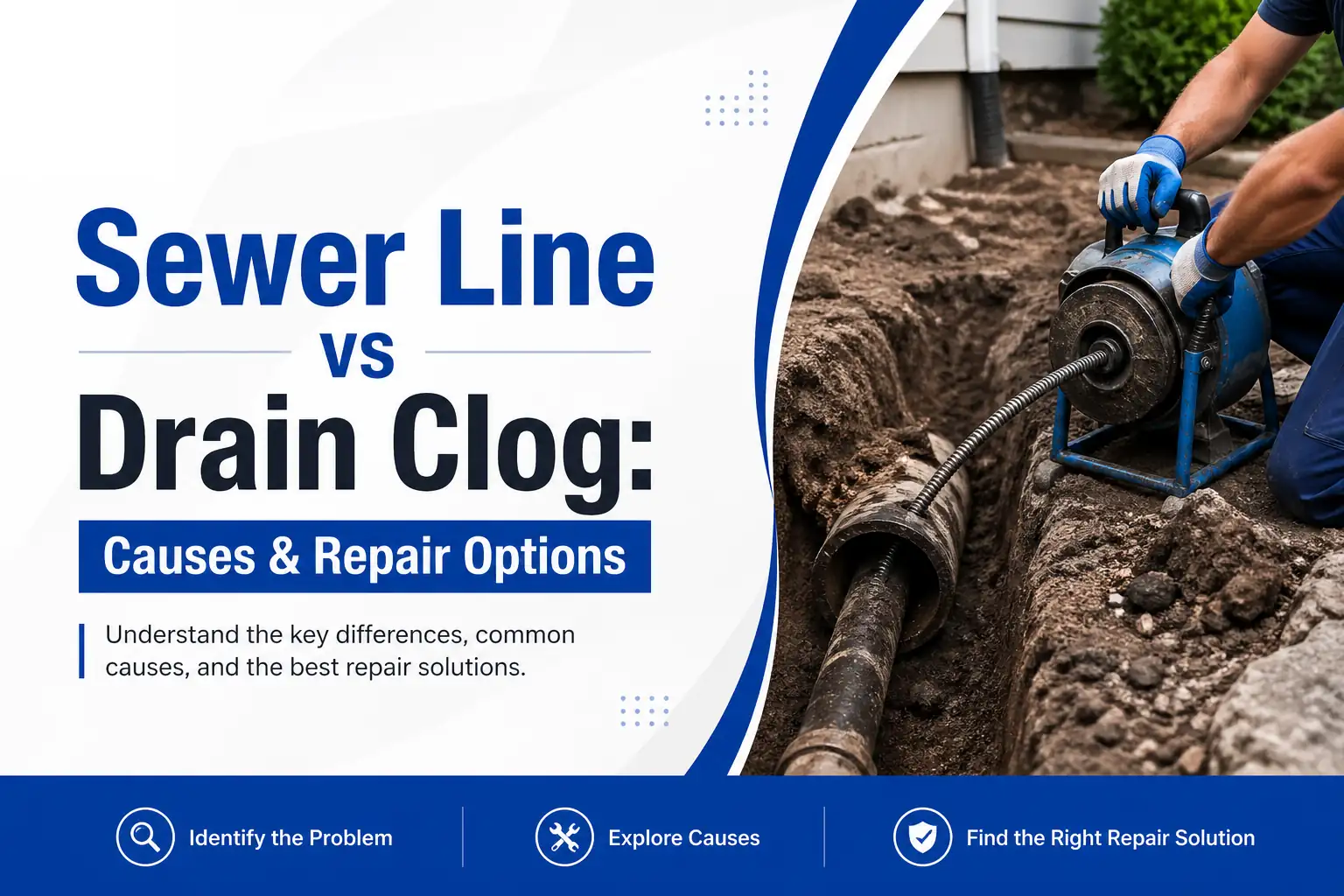

Understanding the sewer line clog vs drain clog difference is critical if you want to protect your entire plumbing system. Many homeowners assume all clogs are the same, but that mistake often leads to costly damage. A clogged drain typically affects one fixture, while a clog in sewer line impacts your whole home. Knowing how to identify early warning signs, what causes clogged drainage, and when the line is clogged beyond DIY repair can save you from a serious sewage backup.
What is the difference between sewer line and drain clog
The key difference in sewer vs drain issues lies in where the blockage occurs. A drain line clog happens inside smaller drain lines connected to sinks, tubs, or washing machines. These clogs are usually caused by grease, soap buildup, or debris. In contrast, a clogged sewer pipe forms in the main sewer pipe that carries wastewater away from your home, which means multiple fixtures can be affected at once.
The table below breaks down the most important differences, helping you quickly identify whether you’re dealing with a minor drain line clog or a serious clog in sewer line.
| Factor | Drain Clog | Sewer Line Clog |
| Location | Occurs in individual drain lines (sink, tub, toilet) | Occurs in main sewer lines connecting home to city system |
| Common Causes | Grease, hair, soap, debris, misuse of drain cleaners | Tree root intrusion, pipe damage, heavy buildup in sewer pipe |
| Affected Fixtures | Usually one clogged drain | Multiple drains affected at the same time |
| Warning Signs | Slow draining water, minor odor, localized standing water | Sewage backup, foul smell, hear gurgling, water in tubs or floors |
| Severity | Moderate and manageable | Severe and can damage entire plumbing system |
| DIY Effectiveness | Sometimes works with basic drain cleaning | Rarely works when line is clogged deep underground |
| Professional Tools Needed | Drain snake, auger | Camera inspection, hydro jetting, root removal |
| Repair Cost | Lower cost if treated early | Higher cost due to complexity and depth of sewer drain pipe |
| Risk Level | Low risk if addressed quickly | High risk including property damage and health hazards |
When the sewer drain pipe becomes blocked, wastewater has nowhere to go, leading to standing water, slow drainage across fixtures, and even indoor flooding. A single clogged drain is often manageable with basic drain cleaning, but a sewer clog requires professional tools like camera inspection and high-pressure cleaning. If ignored, the issue escalates quickly, affecting your entire sewer line drain system.
Common causes of drain line clog vs sewer line clog
Understanding the root cause helps determine the right fix. A drain line clog usually develops from everyday habits. Grease buildup, food waste, hair, soap scum, and misuse of drain cleaners contribute to slow and persistent blockages. Over time, these materials stick to pipe walls and restrict water flow, especially in kitchen and bathroom drain lines.
A clogged sewer pipe forms differently. External factors like tree root intrusion, pipe collapse, or heavy debris buildup block the main sewer lines. In older homes, corrosion and misaligned pipes are common causes. These issues cannot be resolved with DIY tools. For deeper insight into system efficiency, see plumbing system performance tips.
Warning signs of a clogged sewer line vs clogged drain
Recognizing early warning signs can prevent major damage. A clogged drain often shows localized symptoms. You may notice slow drainage, minor odors, or water pooling in one fixture. These signs indicate a blockage limited to a specific drain line clog.
A clogged sewer pipe presents more serious symptoms. Watch for:
- Multiple drains backing up at once
- Water rising in tubs or toilets
- Hear gurgling sounds from pipes
- Frequent sewage backup in lower fixtures
- Outdoor standing water near the yard
If you notice these issues, your line is clogged deeper in the system and requires immediate professional attention. Learn more about basement-related warning signs in basement drain issues.
How professionals diagnose sewer vs drain issues
Accurate diagnosis is essential before any repair begins. Professionals use advanced tools like camera inspection to visually assess the condition of sewer lines and drain lines. This method identifies blockages, cracks, or tree root invasion without digging up your property.
A plumber may also test water flow and inspect the sewer line cleanout to determine the severity of the blockage. Unlike DIY methods, this approach ensures the correct solution is applied. According to the EPA water infrastructure research, aging sewer systems are a major cause of recurring clogs, highlighting the need for professional inspection.
Repair options for sewer line clog and drain clog
Repair methods vary depending on the type of blockage. For a drain line clog, solutions may include:
- Basic drain cleaning techniques
- Hot water flushing to dissolve buildup
- Mechanical snaking to remove debris
These methods are effective for minor clogs but often fail when buildup is severe or recurring.
For a clogged sewer pipe, professional solutions include hydro jetting, root removal, or pipe repair. These methods restore full flow in sewer lines and prevent future issues. Research from UC Berkeley civil engineering studies emphasizes that high-pressure cleaning is one of the most effective long-term solutions for sewer blockages.
Why diy drain cleaning often fails
DIY solutions may seem convenient, but they rarely fix the root problem. Store-bought drain cleaners can damage pipes over time, especially older sewer pipe systems. They only dissolve surface buildup and do not remove deeper obstructions.
In cases where the line is clogged deeper in the system, DIY tools cannot reach the blockage. This leads to repeated clogs and eventual sewage clogged drain emergencies. For safe solutions, professional services like drain cleaning are essential to fully clear the blockage without damaging your system.
Signs professional service is needed
Some situations require immediate expert intervention. If you notice repeated backups, persistent odors, or multiple drains failing at once, your sewer drain pipe likely has a serious blockage. Ignoring these signs can lead to structural damage and health risks.
Other clear indicators include:
- Frequent sewage backup
- Water pooling in unexpected areas
- Unusual sounds when using fixtures
- Visible damage to sewer lines
When these issues appear, professional sewer services are necessary to restore safe operation.
Why choose master plumber service
Choosing the right plumbing expert makes a significant difference in long-term results. A skilled team uses advanced tools like camera inspection and hydro jetting to accurately diagnose and fix issues within your plumbing system. This approach prevents repeat problems and reduces overall repair costs.
Professional service also ensures compliance with safety standards and proper handling of sewage clogged drain situations. According to the American Society of Plumbing Engineers, proper sewer maintenance is essential for protecting both property and public health.
FAQs sewer clog:
what is the main difference between sewer clog and drain clog
A clogged drain affects a single fixture, while a clog in sewer line impacts multiple drains across the home. Sewer clogs are deeper and more serious, often requiring professional tools to fix safely and completely.
what are signs of a clogged sewer line
Common signs of a clogged sewer line include multiple drains backing up, foul odors, standing water, and hearing unusual sounds when water flows. These indicate a blockage in the main sewer pipe.
can i fix a sewer line clog myself
DIY methods rarely work for a clogged sewer pipe. These clogs are deep within the system and often involve roots or heavy debris. Professional tools like hydro jetting and camera inspection are needed for proper repair.
what causes sewage backup in home
Sewage backup is usually caused by a severe clogged sewer pipe, tree roots, or pipe damage. When wastewater cannot flow out, it reverses direction and enters the home through lower drains.
how do plumbers clear sewer lines
Plumbers use specialized methods such as hydro jetting, mechanical augers, and inspection cameras to remove blockages and restore flow in sewer lines. These solutions ensure long-term results and prevent recurring issues.
how to prevent clogged drainage
To prevent clogged systems, avoid pouring grease down drains, use strainers, and schedule regular maintenance. Professional inspections help detect issues early before they become serious clogged drainage problems.
Take action before a minor clog becomes a major repair
Ignoring the sewer line clog vs drain clog difference can lead to serious property damage and expensive repairs. What starts as a slow clogged drain can quickly turn into a full sewage backup if the underlying issue is in the sewer lines. Acting early protects your home and keeps your plumbing system running efficiently.
If you are dealing with recurring clogs, unusual sounds, or signs that your line is clogged, it is time to get expert help. Contact Master Plumber Service today through plumbing services to schedule an inspection and get a long-term solution you can rely on.