

If you are wondering how often to replace anode rod in water heater, you are already ahead of most homeowners. The water heater anode rod is one of the most important yet overlooked components inside your water heater. It protects your tank from rust and tank corrosion by sacrificing itself over time. Ignoring it can lead to expensive damage, leaks, and even full system replacement.
Whether you own gas water heaters or electric water heaters, understanding the lifespan of an anode rod water heater system is essential. In this guide, you will learn how long rods last, when to replace them, and why professional service is often the smarter choice.
What Does an Anode Rod Do Inside a Water Heater?
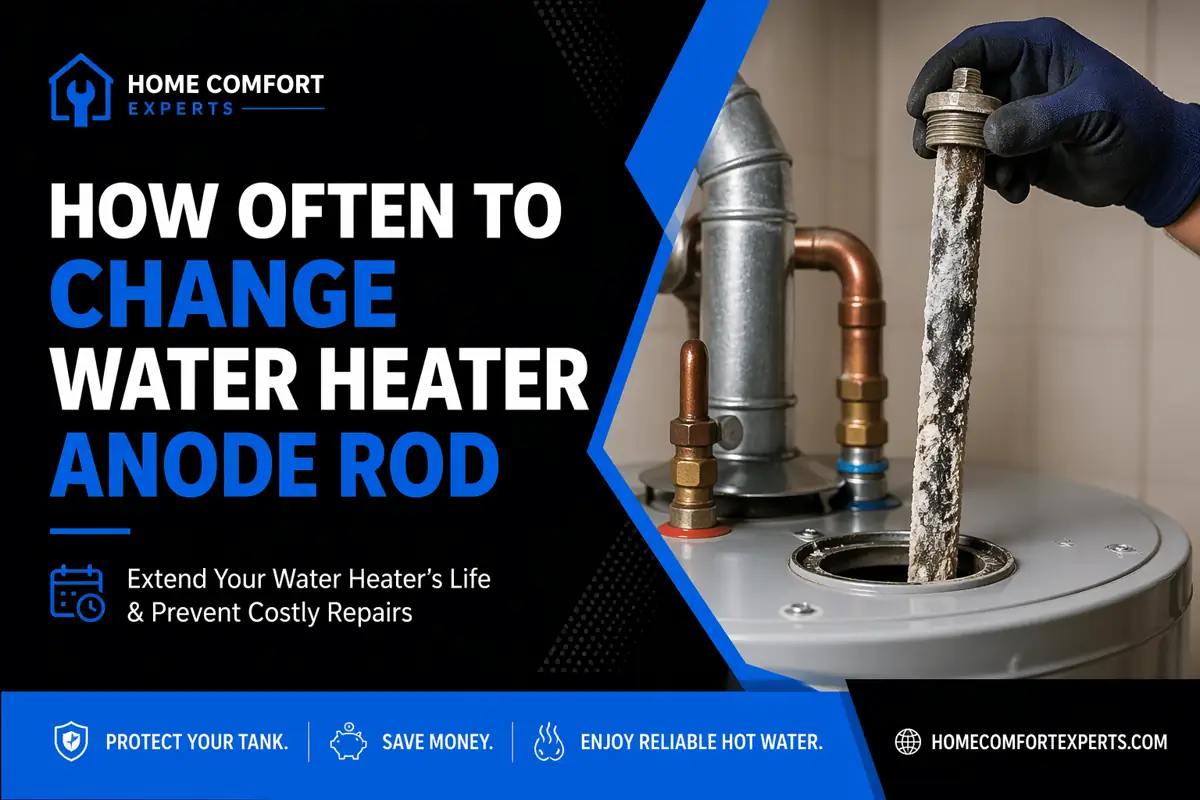
The sacrificial anode rod is installed at the top of the water heater tank and is designed to attract corrosive elements. Instead of your tank rusting, the rod deteriorates first. This is why it is often called a heater anode rod. Most systems use a magnesium rod or magnesium aluminum blend, depending on water conditions and usage patterns.
Over time, the rod slowly dissolves due to chemical reactions, especially in areas with soft water. Without a functioning anode rod, corrosion begins at the bottom of your water heater tank, leading to leaks and failure. According to U.S. Department of Energy water heating guide, regular maintenance significantly extends system life.
How Often to Replace Anode Rod in Water Heater?
In most homes, you should plan water heater anode rod replacement every 3 to 5 years. However, this timeline changes depending on water quality, heater usage, and the type of magnesium anode rod installed. Homes with soft water may need replacement sooner because the rod deteriorates faster.
If you live in Texas areas like Houston, Katy, or The Woodlands, local water conditions can affect lifespan. Many homeowners searching how often to replace anode rod in water heater houston or how often to replace anode rod in water heater woodlands find that inspections every 2 to 3 years are more reliable. You can learn more about system lifespan in this heater lifespan guide to better plan maintenance.
Regional Considerations in Texas
Search trends like how often to replace anode rod in water heater texas, betterkaty, or spring show that water hardness and mineral levels vary widely. In high mineral areas, rods wear down faster, making earlier inspections essential to avoid premature tank failure.
Types of Anode Rods and Their Lifespan
Not all anode rods for water heater systems are the same. The most common type is the magnesium anode rod, which offers strong protection but dissolves faster. Aluminum rods last longer but may not provide the same level of corrosion resistance, especially in hot water systems with heavy use.
Some modern anode rods for water heaters replacing options include powered rods that last longer but cost more upfront. A study from University of Minnesota Extension highlights how How Often Should You Change Your Water Heater Anode Rod to Avoid Damage?
If you are wondering how often to replace anode rod in water heater, you are already ahead of most homeowners. The water heater anode rod is one of the most important yet overlooked components inside your water heater. It protects your tank from rust and tank corrosion by sacrificing itself over time. Ignoring it can lead to expensive damage, leaks, and even full system replacement.
Whether you own gas water heaters or electric water heaters, understanding the lifespan of an anode rod water heater system is essential. In this guide, you will learn how long rods last, when to replace them, and why professional service is often the smarter choice.
What Does an Anode Rod Do Inside a Water Heater?
The sacrificial anode rod is installed at the top of the water heater tank and is designed to attract corrosive elements. Instead of your tank rusting, the rod deteriorates first. This is why it is often called a heater anode rod. Most systems use a magnesium rod or magnesium aluminum blend, depending on water conditions and usage patterns.
Over time, the rod slowly dissolves due to chemical reactions, especially in areas with soft water. Without a functioning anode rod, corrosion begins at the bottom of your water heater tank, leading to leaks and failure. According to U.S. Department of Energy water heating guide, regular maintenance significantly extends system life.
How Often to Replace Anode Rod in Water Heater?
In most homes, you should plan water heater anode rod replacement every 3 to 5 years. However, this timeline changes depending on water quality, heater usage, and the type of magnesium anode rod installed. Homes with soft water may need replacement sooner because the rod deteriorates faster.
If you live in Texas areas like Houston, Katy, or The Woodlands, local water conditions can affect lifespan. Many homeowners searching how often to replace anode rod in water heater houston or how often to replace anode rod in water heater woodlands find that inspections every 2 to 3 years are more reliable. You can learn more about system lifespan in this heater lifespan guide to better plan maintenance.
Regional Considerations in Texas
Search trends like how often to replace anode rod in water heater texas, betterkaty, or spring show that water hardness and mineral levels vary widely. In high mineral areas, rods wear down faster, making earlier inspections essential to avoid premature tank failure.
Types of Anode Rods and Their Lifespan
Not all anode rods for water heater systems are the same. The most common type is the magnesium anode rod, which offers strong protection but dissolves faster. Aluminum rods last longer but may not provide the same level of corrosion resistance, especially in hot water systems with heavy use.
Some modern anode rods for water heaters replacing options include powered rods that last longer but cost more upfront. A study from University of Minnesota Extension highlights how water chemistry impacts corrosion rates, reinforcing the need for proper rod selection.
Signs Your Anode Rod Needs Replacement
Recognizing early warning signs can save your water heater. If your hot water smells like rotten eggs, that often indicates a failing heater anode. Discolored water, metallic taste, or visible rust particles are also strong indicators that your water heater anode rod is no longer protecting the tank.
Another clear sign is noise from inside the tank. Sediment buildup caused by a deteriorating rod settles at the bottom of your water heater, leading to popping sounds. If you notice any of these issues, it is time to change water heater anode before costly damage occurs.
Step-by-Step Overview of Anode Rod Replacement
Replacing a rod involves shutting off power or gas, turning off the water supply, and draining part of the tank. You must close the drain valve, remove the old rod using a socket wrench, and install a new one. After that, you refill the tank and restore power or relight the pilot light for gas water heaters.
While this may sound simple, in reality, rods are often stuck due to corrosion. Attempting DIY removal can damage the tank or fittings. For guidance on proper maintenance, check this DIY plumbing tips resource, but remember that anode rod work is rarely beginner friendly.
Cost to Replace Anode Rod in Water Heater
The cost to replace anode rod in water heater typically ranges from $150 to $400 depending on accessibility, rod type, and labor. While the rod itself is inexpensive, the difficulty of removal and installation adds to the total cost. Professional service ensures the job is done without damaging your tank.
Delaying replacement can lead to full tank failure, which costs significantly more. In fact, ignoring rod maintenance is one of the leading causes of premature heater replacement. A helpful benchmark can be found in this inspection cost guide, which explains how regular checks reduce long term expenses.
Why DIY Anode Rod Replacement Often Fails
Many homeowners underestimate how difficult it is to remove an old anode rod. Years of corrosion can lock the rod in place, requiring specialized tools and significant force. Using the wrong technique can strip threads or damage the tank, turning a simple repair into a major plumbing issue.
Another common mistake is installing the wrong type of heater anode rod. Choosing between magnesium anode and aluminum requires knowledge of your water conditions. Improper installation can reduce efficiency and shorten the life of your electric water heater anode rod system.
Signs Professional Service Is Needed
If your water heater is over three years old and has never had an inspection, it is time to call a professional. Difficulty loosening the rod, visible rust, or reduced hot water output are clear indicators that expert help is required. Attempting repairs without proper tools can lead to leaks or internal damage.
Additionally, if your system shows signs of widespread tank corrosion, professional evaluation is critical. Services like water heater repair can help determine whether replacement or repair is the better option before a complete breakdown occurs.
Why Choose Master Plumber Service
Choosing the right plumbing expert ensures your water heater anode rod replacement is handled safely and efficiently. Experienced technicians understand how to assess water quality, select the correct anode rods for water heater, and install them without risking damage to your system.
Working with a trusted team also means long term protection for your home. Whether you need routine maintenance or urgent service, professional support ensures your water heater continues delivering reliable hot water without unexpected failures.
FAQs About Anode Rod Replacement
How long do anode rods last?
Most anode rods last between 3 to 5 years, depending on water quality and usage. Homes with soft water may experience faster wear, requiring more frequent inspections and replacements.
Can I replace an anode rod myself?
While possible, DIY replacement is challenging. A stuck water heater anode rod can be difficult to remove and may damage the tank if handled incorrectly. Professional service is often safer.
What happens if I never replace it?
Ignoring your heater anode leads to tank corrosion, leaks, and eventually total heater failure. Replacement is far cheaper than installing a new system.
Is it different for electric water heaters?
No major difference, but accessing an electric water heater anode rod may vary slightly. Maintenance intervals remain similar regardless of heater type.
How do I know which rod type I need?
The choice between magnesium rod and aluminum depends on water chemistry. A professional can test your water and recommend the best option.
Does replacing the rod improve water quality?
Yes, a healthy anode rod helps reduce odors and contamination, improving overall hot water quality and taste.
Conclusion: Protect Your Water Heater Before It Fails
Understanding how often to replace anode rod in water heater is key to extending the life of your system and avoiding costly repairs. Waiting too long can lead to irreversible damage, while timely replacement keeps your water heater running efficiently for years.
If you are unsure about the condition of your water heater anode rod, it is best to have it inspected by professionals. Master Plumber Service can help you assess, replace, and maintain your system so you avoid unexpected breakdowns. Schedule an inspection today and keep your hot water reliable when you need it most.